Montessori Practical Life lessons
Practical Life lessons use real, child-sized tools for real tasks. They build concentration, coordination and independence, and they prepare the hand and the habits that every later area depends on. Most homeschool families start here.
The first lesson in this area is Hand Washing, typically from 15 months to 3.5 years.
In order
- 1
Hand Washing
15 months to 3.5 yearsA full hand-washing sequence at a child-height basin or a stool at the sink, done slowly enough for a toddler to copy.
Materials: Hand-Washing Station
- 2
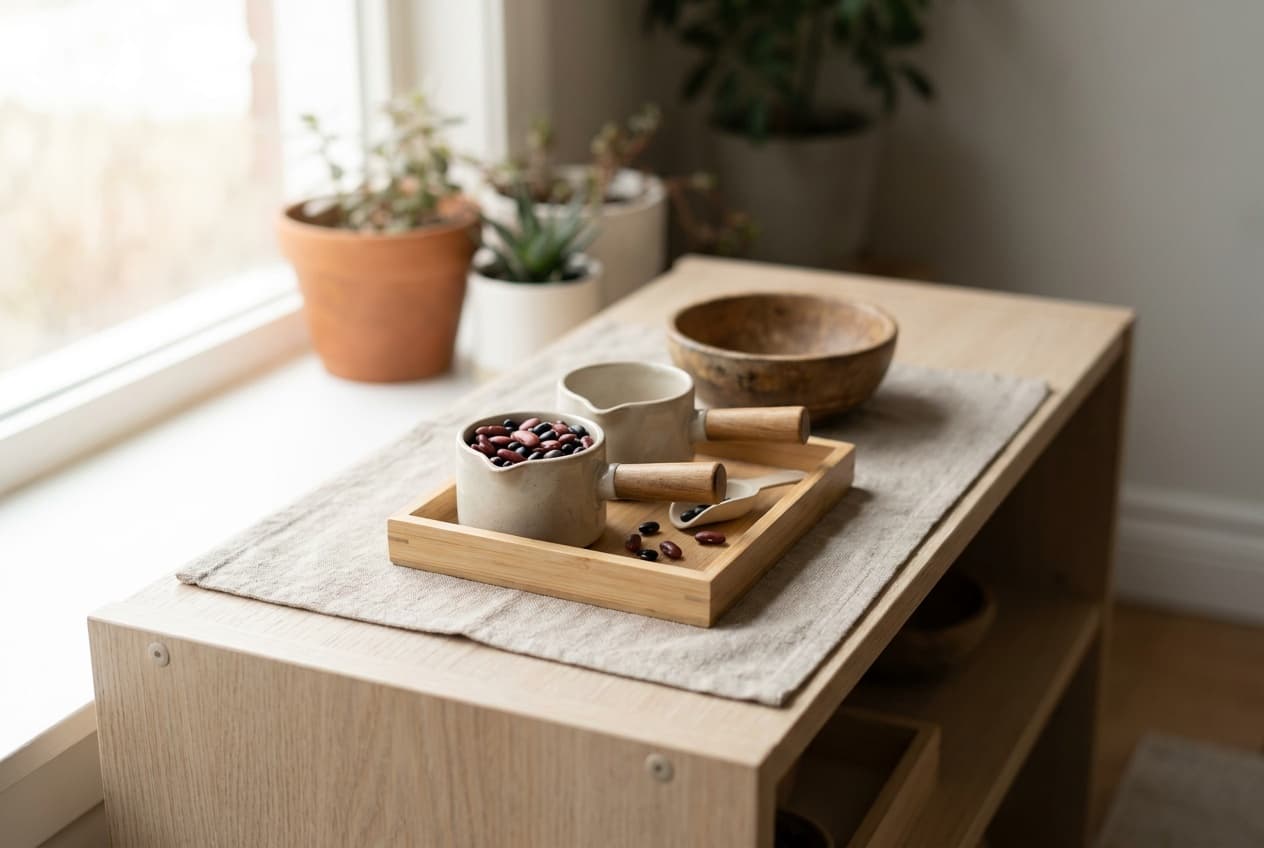
Dry Pouring Between Two Pitchers
18 months to 3.5 yearsPouring rice or dried beans from one small pitcher into another on a tray, the classic first pouring lesson.
Materials: Small Pouring Pitchers, Work Tray
- 3
Spooning: Transferring with a Spoon
18 months to 3.5 yearsMoving dried beans from one small bowl to another with a spoon, one spoonful at a time, the toddler's first transfer work.
Materials: Spooning Set
- 4
Wet Pouring Between Two Pitchers
2 to 4 yearsPouring water from one small pitcher to another on a tray, and wiping up drips with a sponge, the step after pouring beans.
Materials: Small Pouring Pitchers, Work Tray
- 5
Grace and Courtesy Lessons
2 to 6 yearsShort acted-out lessons in everyday manners: greeting someone, offering and receiving an object, interrupting politely, saying thank you.
- 6
Button Dressing Frame
2.5 to 4.5 yearsPracticing buttoning and unbuttoning on a wooden frame with two fabric panels, so the child can master the movement before trying it on their own clothes.
Materials: Button Dressing Frame
- 7
Sweeping with a Brush and Dustpan
2.5 to 5 yearsSweeping scattered beans into a chalk circle with a child-sized brush, then into a dustpan, then sweeping a real floor.
Materials: Child-Sized Sweeping Set
- 8
Folding Cloths
2.5 to 5 yearsFolding small square cloths along stitched lines, first in half, then in quarters and on the diagonal, before moving on to real napkins and laundry.
Materials: Folding Cloths
- 9
Banana Slicing (First Food Preparation)
2.5 to 5 yearsWashing hands, peeling a banana, and slicing it on a small board with a crinkle cutter or a butter knife, then serving the slices.
Materials: Child's Food Preparation Tools
- 10
Table Scrubbing
3 to 5.5 yearsWashing a small table with a soapy brush, then rinsing, drying and putting every piece away: one of the longest practical life sequences.
Materials: Table Scrubbing Set
- 11
Flower Arranging
3 to 5.5 yearsFilling a small vase through a funnel, trimming a stem to fit, setting the flower on a doily, and choosing a place for it in the room.
Materials: Flower Arranging Set
- 12
Metal Polishing
3.5 to 6 yearsDabbing polish onto a small brass or copper object, rubbing it in small circles, and buffing it until it shines, with the tray cleaned and put away after.
Materials: Metal Polishing Set
Practical Life materials
- Hand-Washing Station
A child-height basin, small pitcher, soap dish and towel hook, or a stable step stool at the family sink.
- Small Pouring Pitchers
A matched pair of small pitchers sized for a toddler's hand.
- Work Tray
A rimmed tray that holds one activity and contains spills, sized for a child to carry with two hands.
- Button Dressing Frame
A square wooden frame with two fabric panels joined by large buttons.
- Work Rug
A small plain rug that marks out a child's work space on the floor.
- Spooning Set
Two small bowls and a spoon on a tray, for moving dried beans from one bowl to the other.
- Child-Sized Sweeping Set
A hand brush and dustpan, and later a short broom, sized for a child's hands.
- Table Scrubbing Set
A basin, a pitcher, a scrub brush, a sponge, soap and a drying cloth on a tray, sized for a child washing a table.
- Folding Cloths
Small square cloths with a contrasting line stitched where each fold goes: in half, in quarters, on the diagonal.
- Flower Arranging Set
A tray of small bud vases with a pitcher and funnel to fill them, for arranging single flowers.
- Child's Food Preparation Tools
A crinkle cutter or blunt nylon knife and a small cutting board, sized for a child's first food preparation.
- Metal Polishing Set
A small tray or box with a mild metal polish, an applicator, a soft cloth and a small brass or copper object.
These lessons run from the youngest starting age. To see what sits beside them on the shelf at one age, across all five areas, start with 12 to 18 months.